The same symbol appeared in Kongo, Lakota, Maya, Celtic, and Vedic traditions. None of them had contact. None of them knew.
The Convergence · 6-9-26
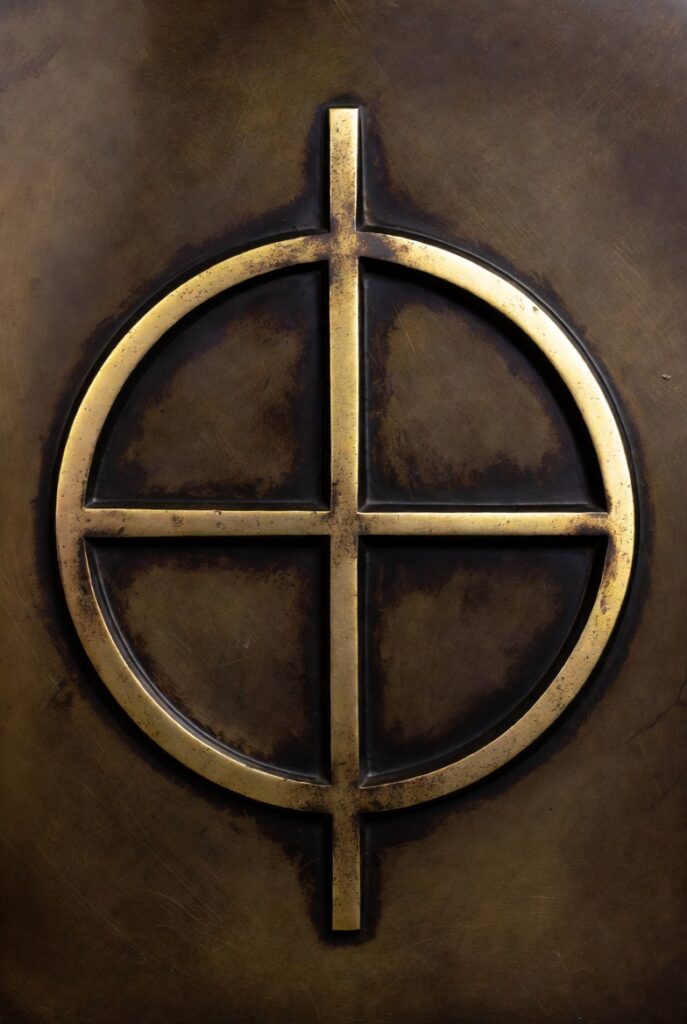
The symbol on the cover of The Ground Beneath is the Kongo dikenga. It comes from the Kongo tradition of central Africa — a circle divided by a cross, with four cardinal marks and a center point. It maps existence: the living world above the horizontal line, the world of ancestors below, the four cardinal moments of a life.
The same symbol appears in the Lakota medicine wheel. The same structure appears in the Maya four-directional cosmogram. The Celtic wheel cross. The Vedic solar wheel. All of them use the same form — a circle, a cross, four cardinal points, a center — to map the same concept: the structure of existence, the four directions of a life, the relationship between the living world and what came before and comes after.
None of these traditions had contact. None of them knew about the others. The symbol was not shared. It was arrived at — independently — by civilizations separated by oceans and millennia.
This is one of twenty-two structural values documented the same way across eighty-five traditions in The Ground Beneath. Not similar values. Not parallel metaphors. The same structural value, independently documented, in traditions that could not have borrowed it from each other.
The symbol was chosen for the cover because it is not claimed by any single tradition. It belongs to all of them. That is the argument of the book expressed in a single image.
The methodology that governs how this was researched and verified is documented here: The Method →
Richard P. Wolf is the author of The Ground Beneath, forthcoming 2026. About the research methodology →
Get new posts before they’re public
Subscribers receive research notes, chapter previews, and Circle updates before they appear on the site.
JOIN THE LIST →