Indigenous & Oral tradition · North America · Glossary of Time profile
Lakota
Lakȟóta
Thítȟuŋwaŋ (Teton) · One of the Seven Council Fires, Očhéthi Šakówiŋ
~170,000
Estimated Lakota population
Varies
Fluent speaker counts differ by source
Early 1600s
Horses reach Plains peoples; timing varied
c. 900 CE
Battiste Good winter count begins (legend-linked)
7
Lakota bands
A note on language: Lakota terms throughout this profile use the Standard Lakota Orthography developed by the Lakota Language Consortium. Lakota communities use several writing systems, and the Standing Rock Sioux Tribe banned the Lakota Language Consortium in 2022. Characters including ȟ, č, š, ŋ, and the saltillo ʼ are standard Lakota letters, not punctuation. Recordings by Lakota speakers may be found at Forvo Lakota.
Visual Record
The Lakota in Image
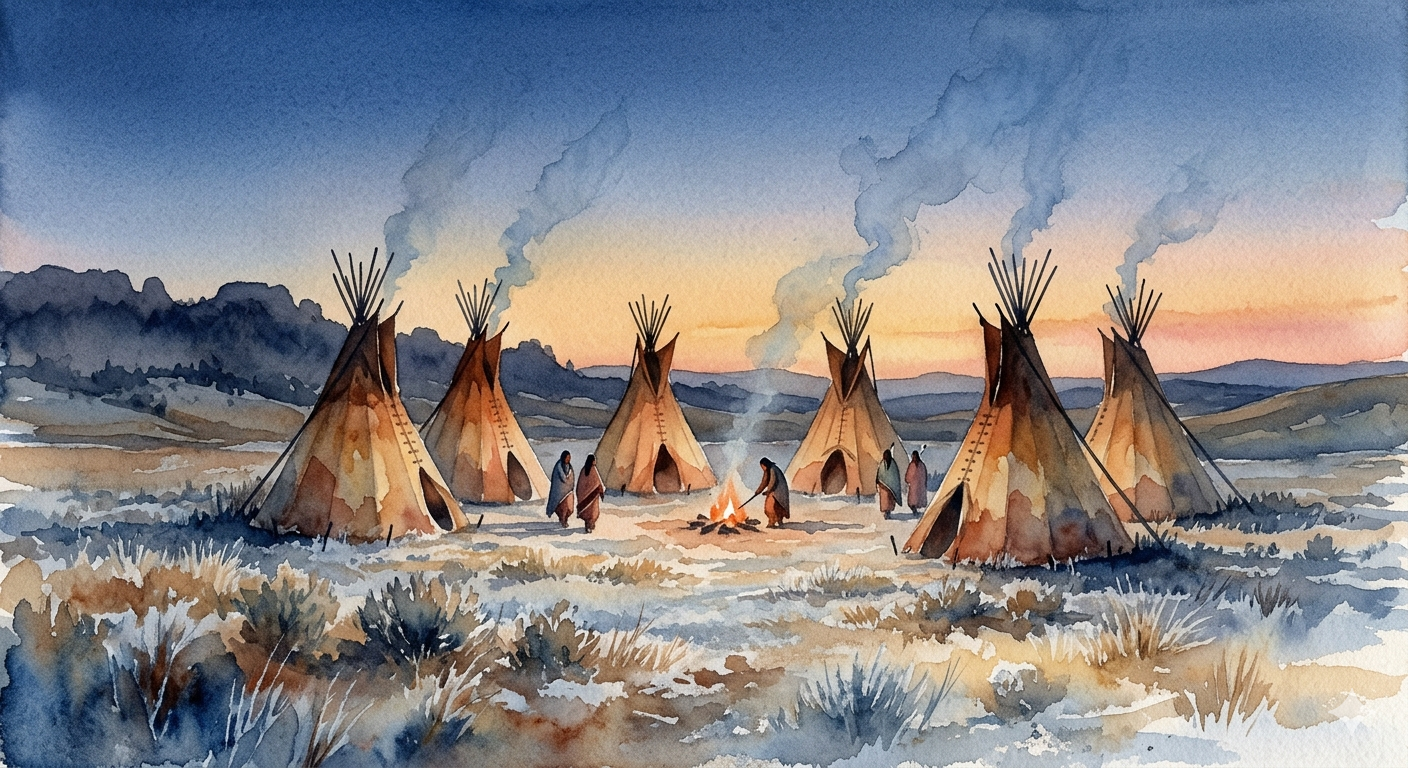
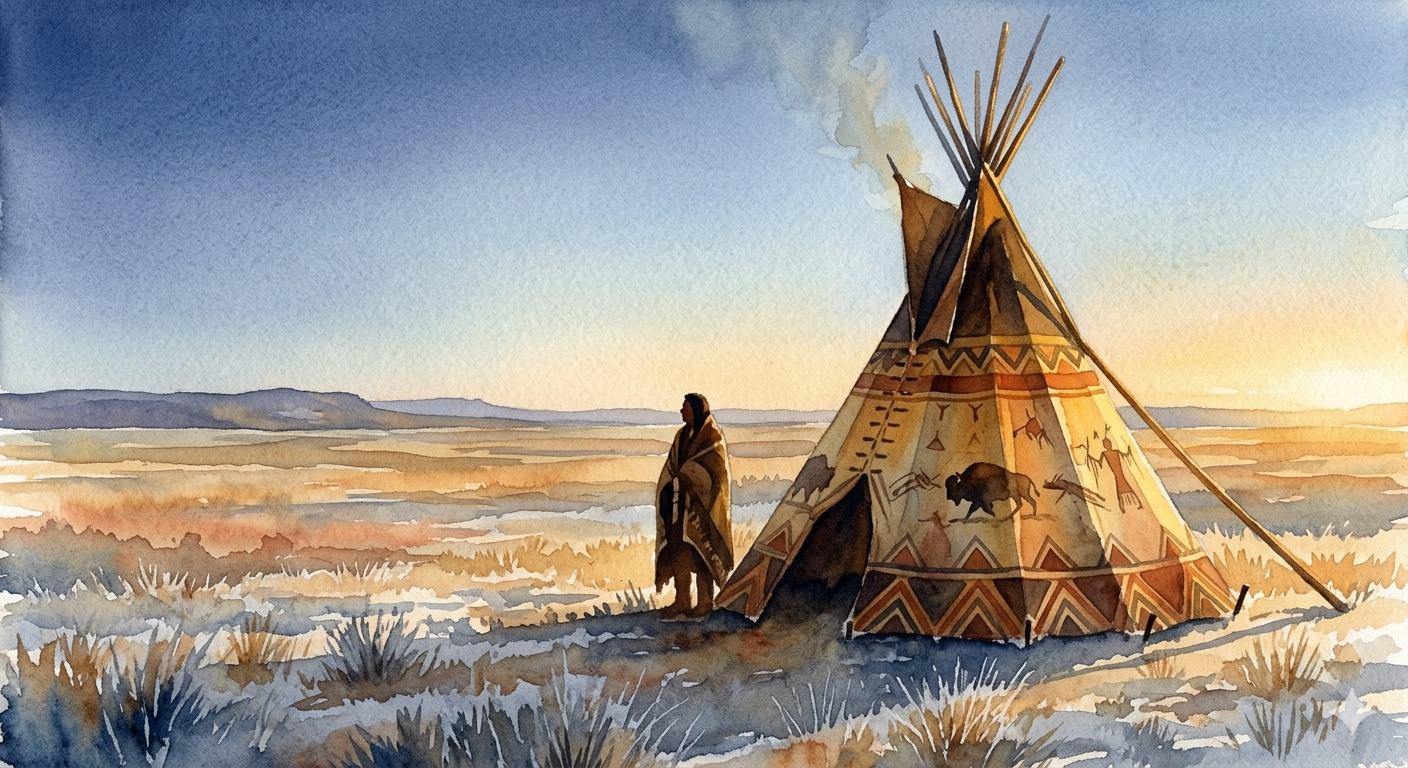
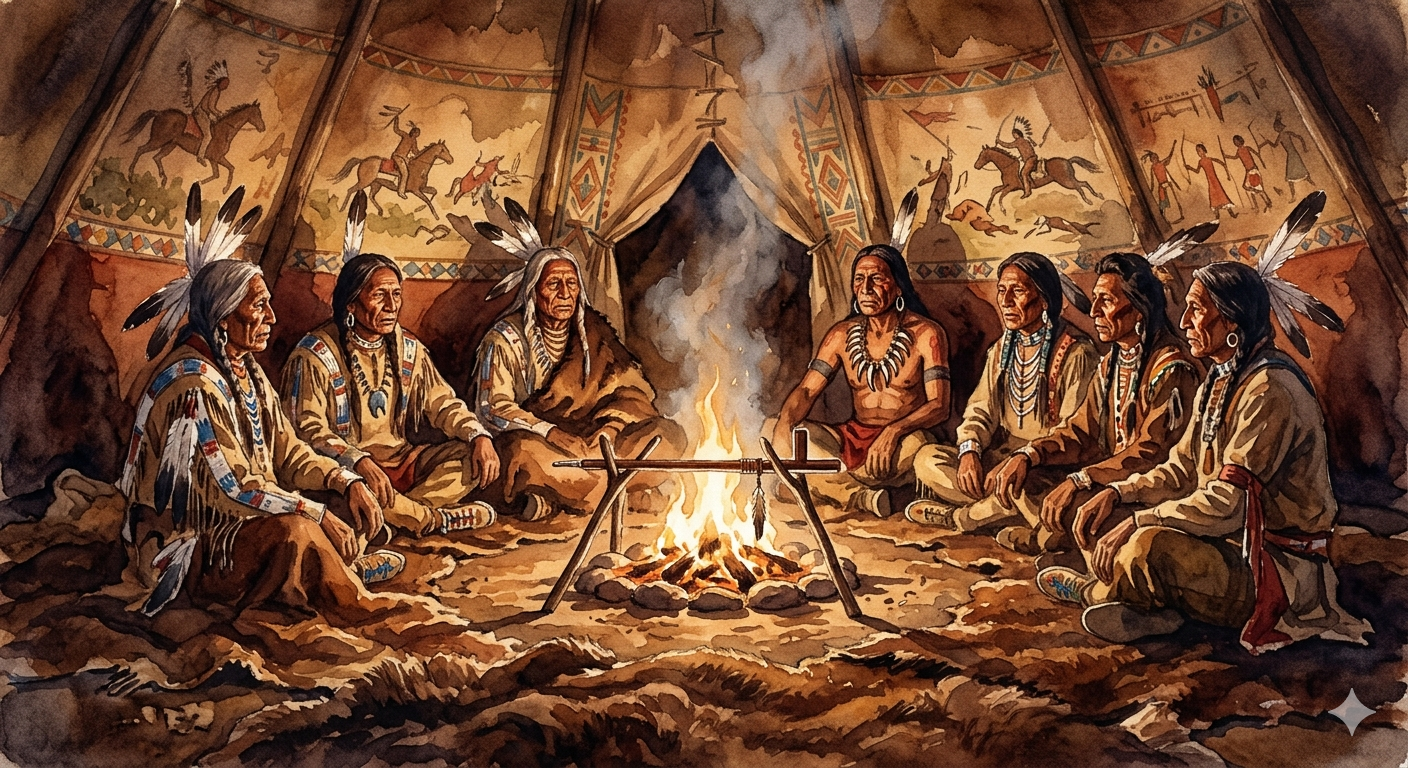
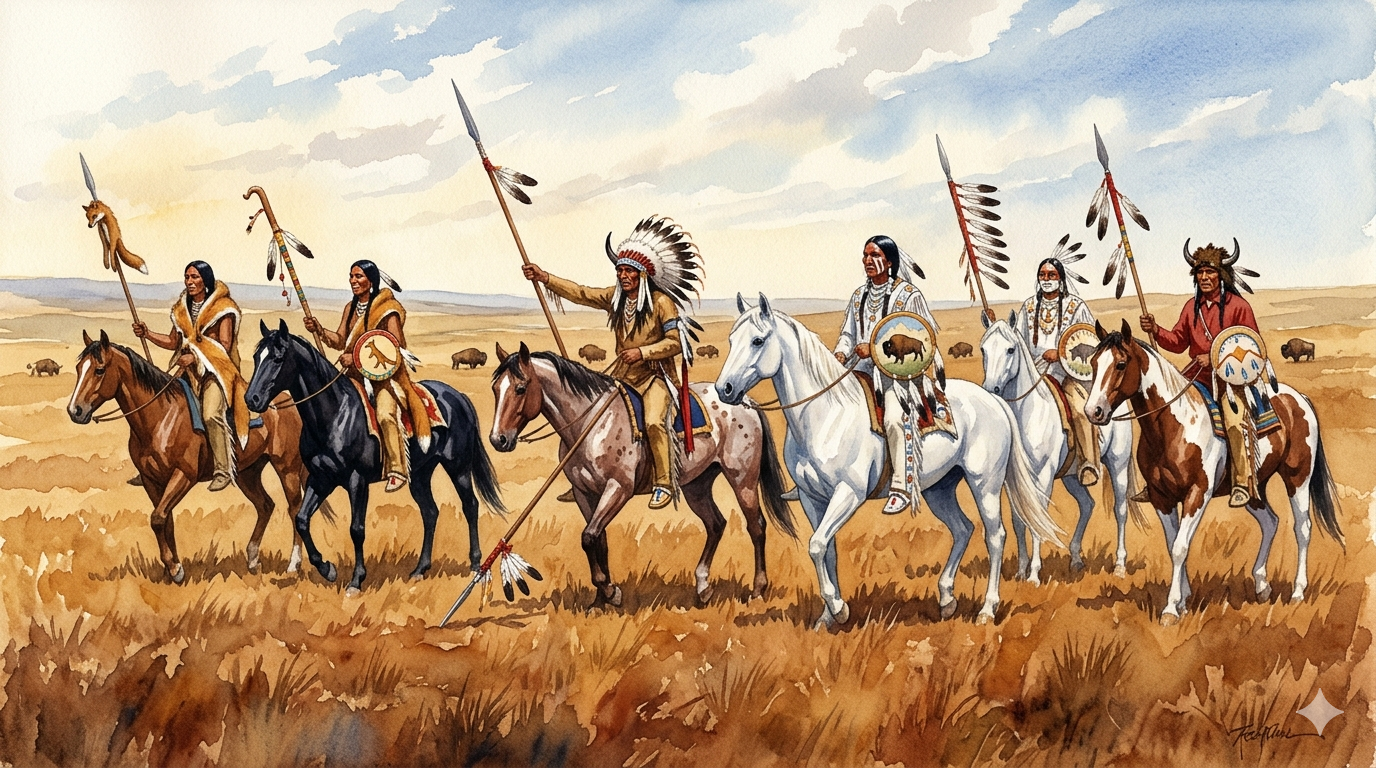
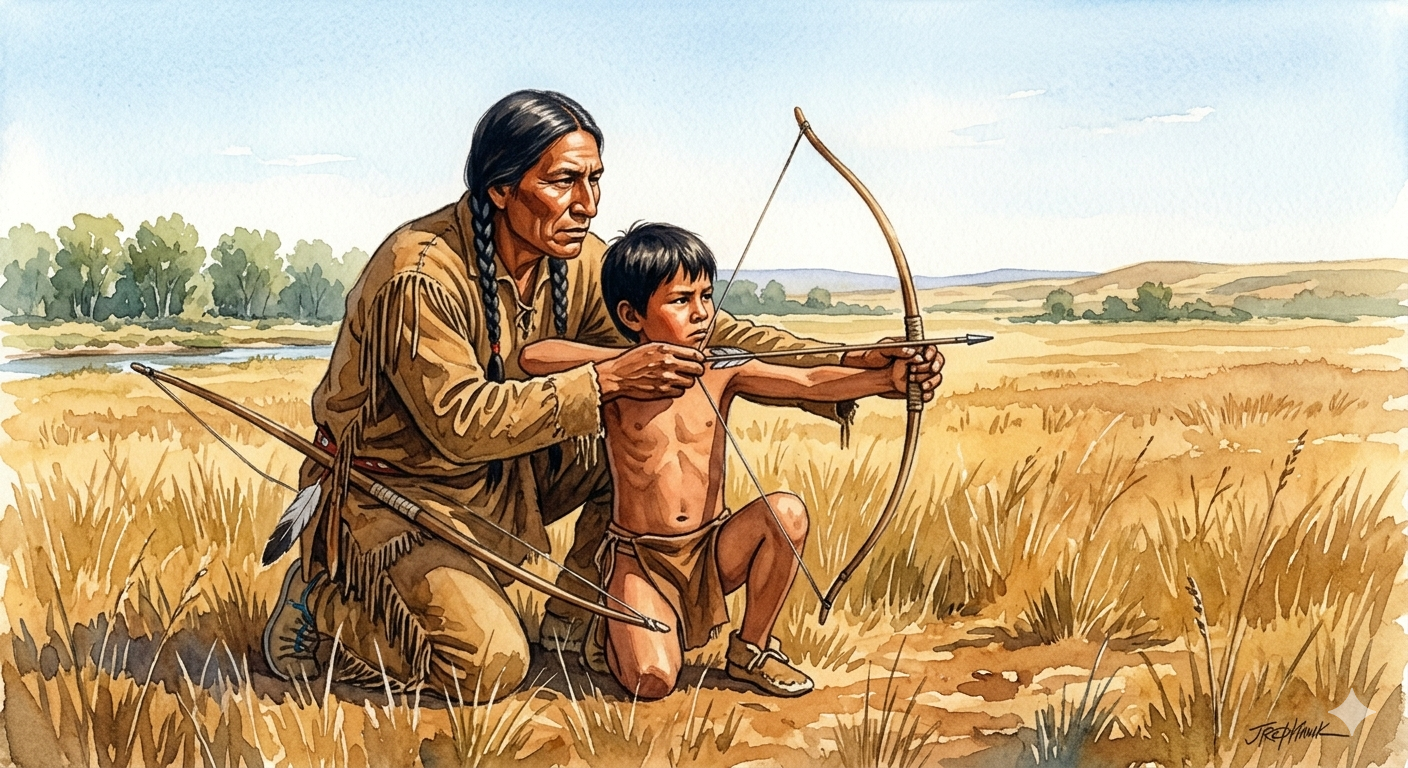
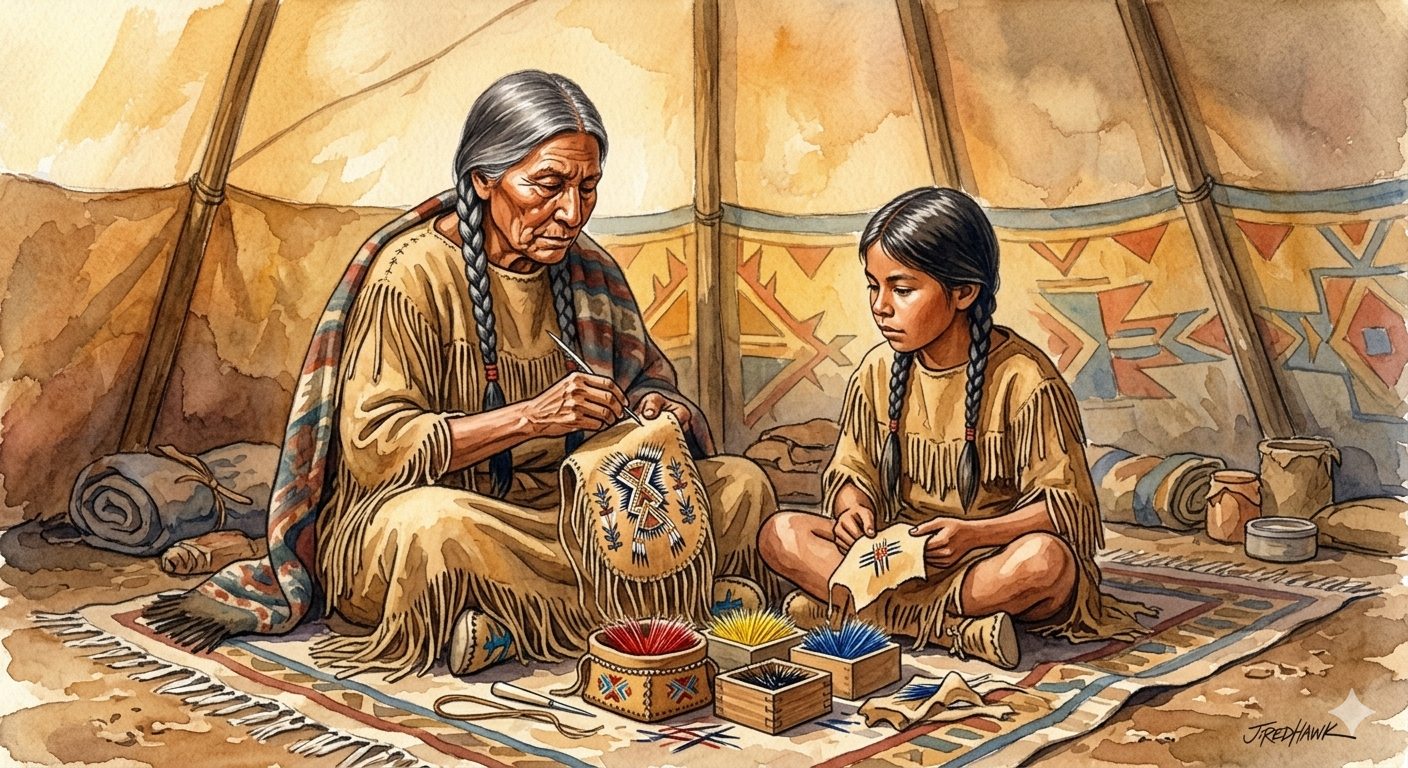
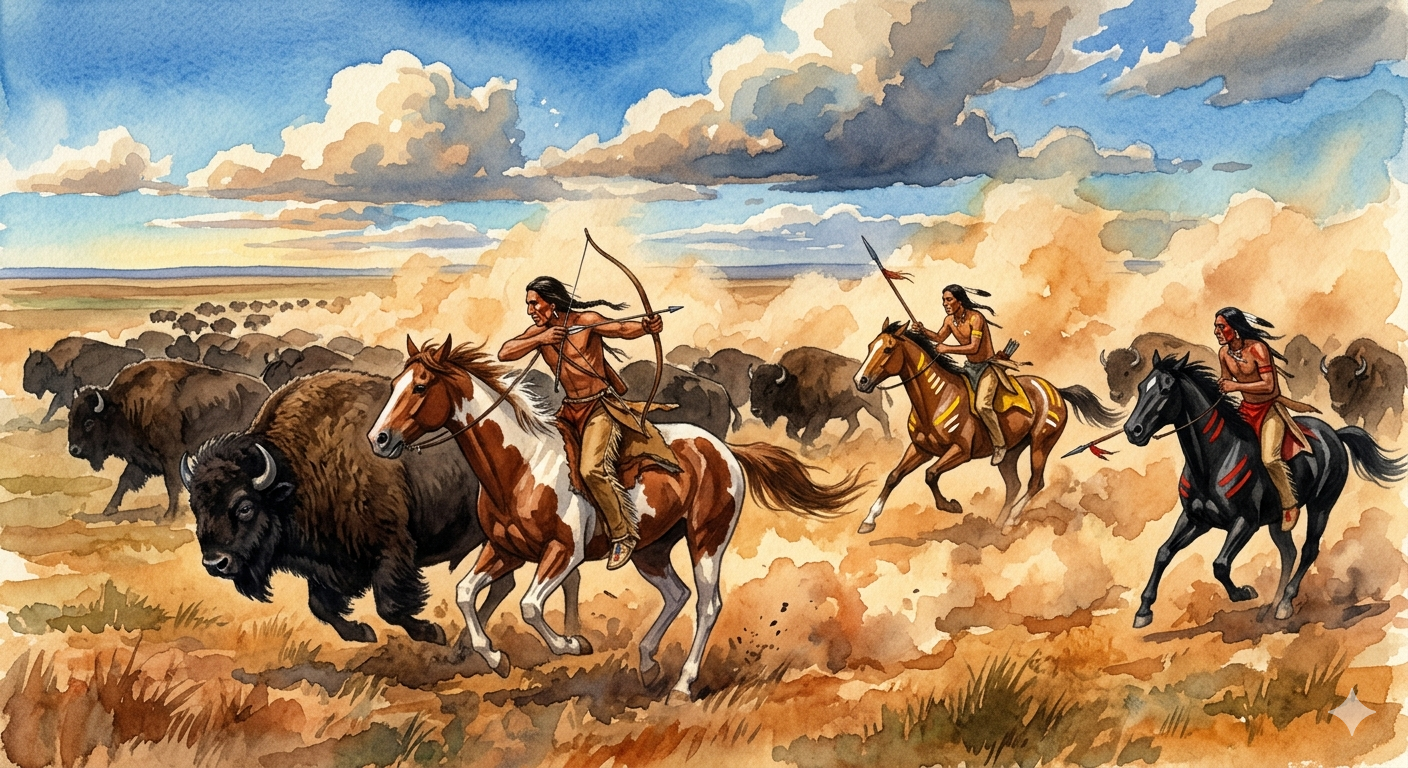
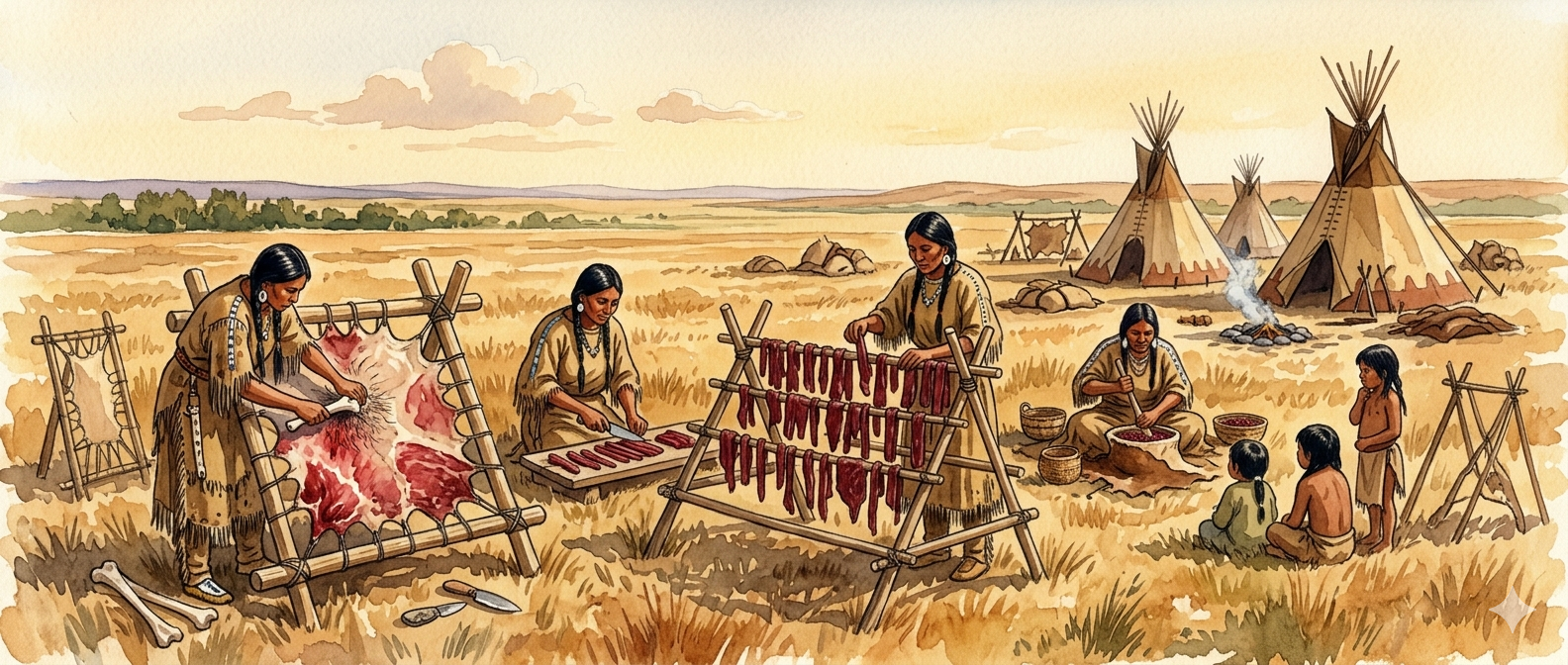
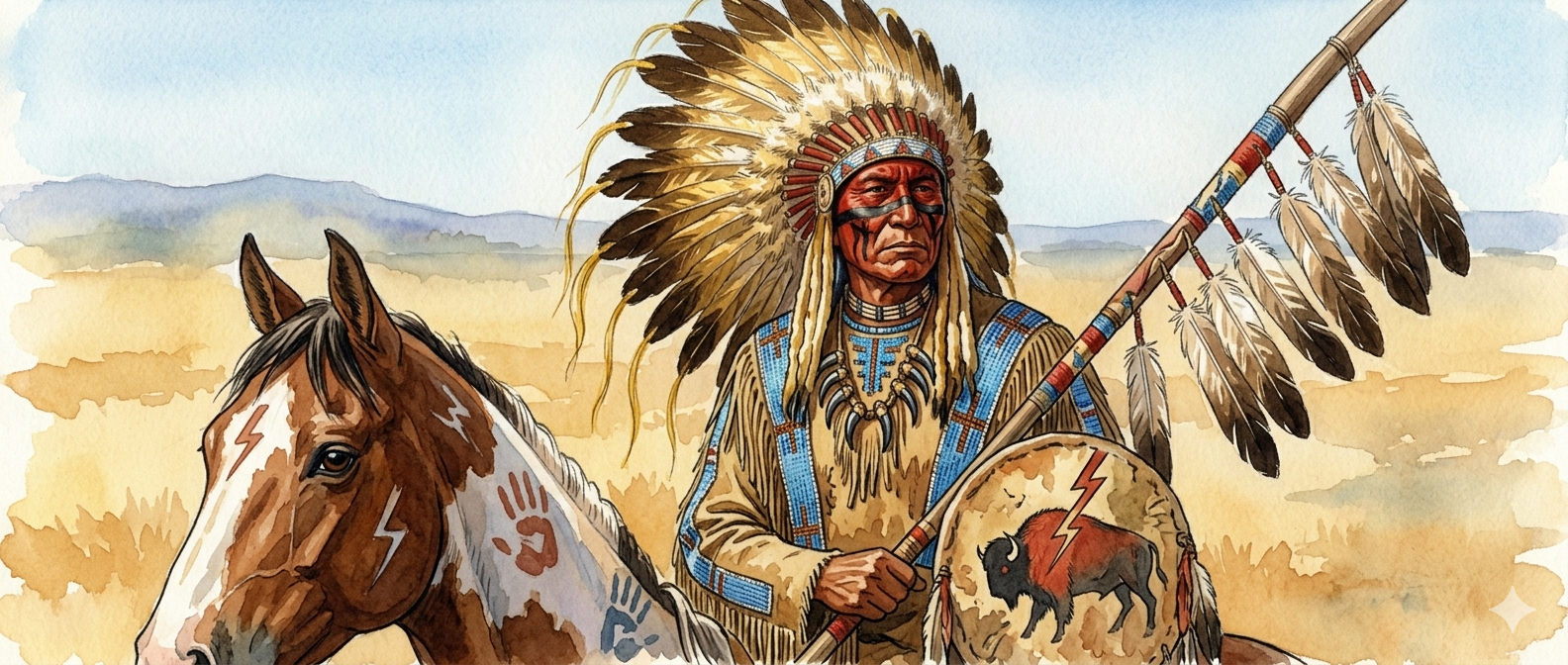
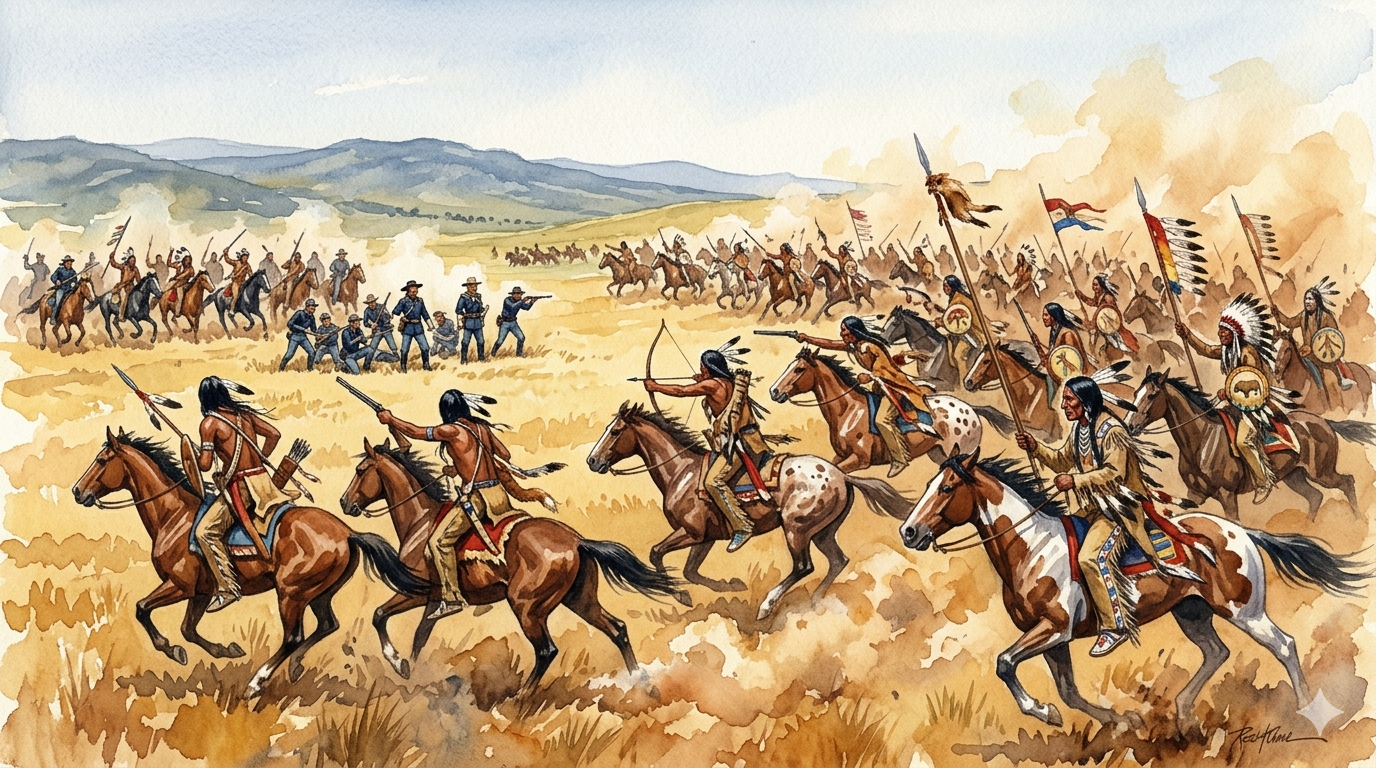
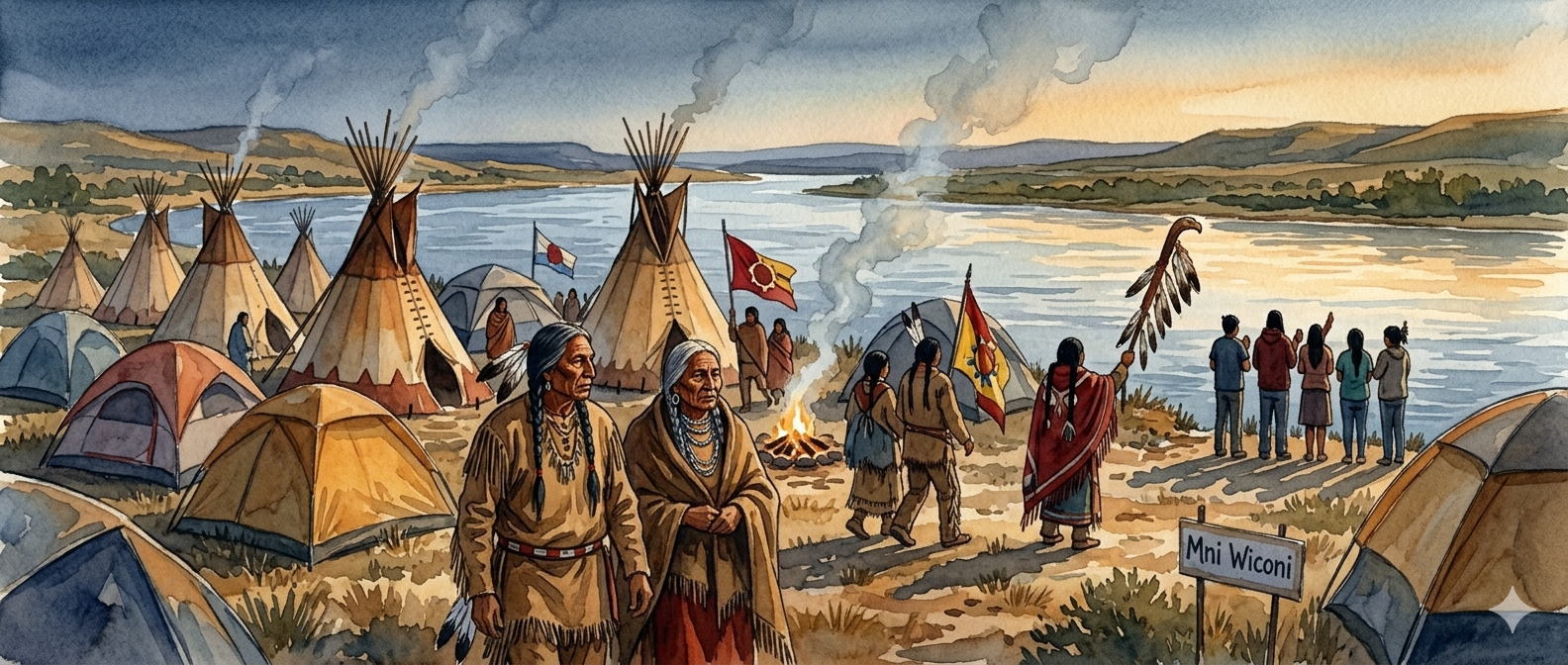
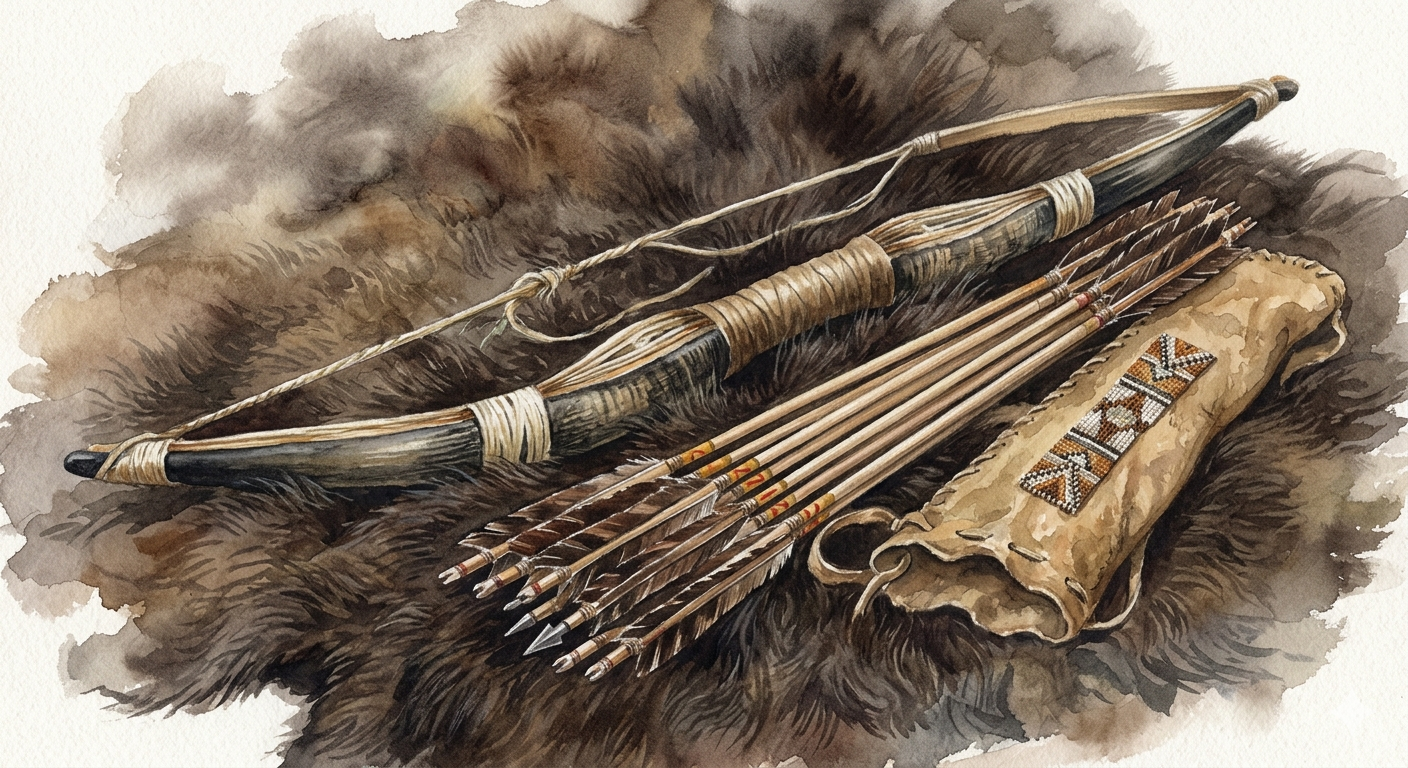
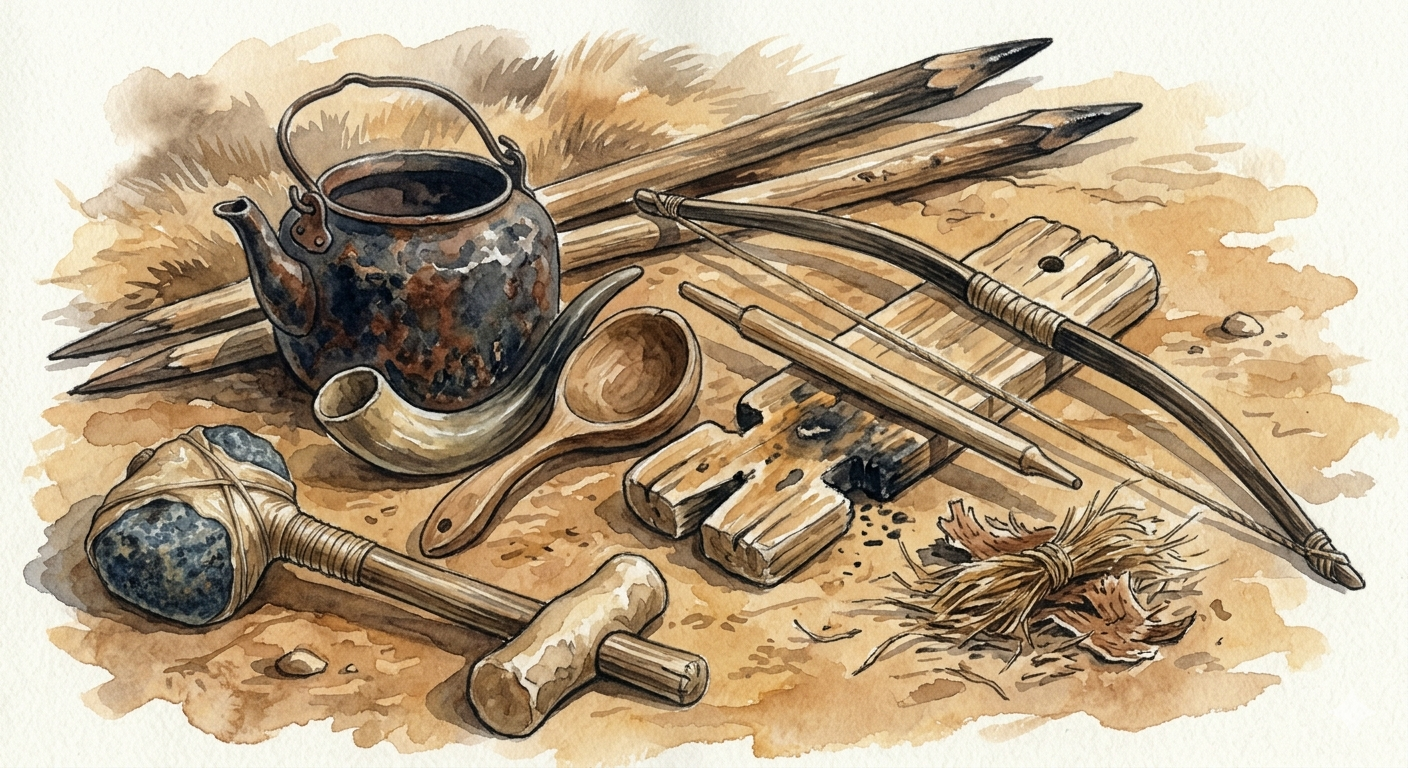
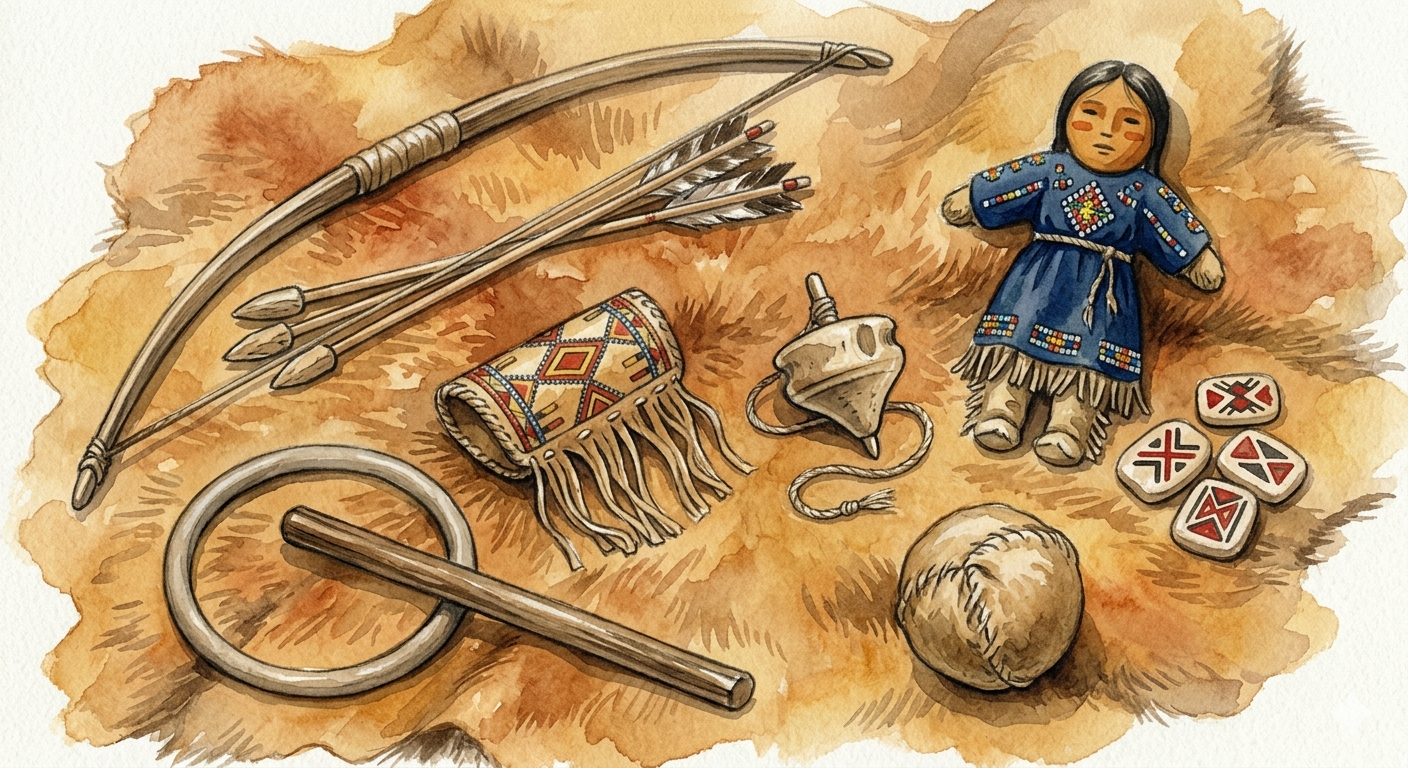
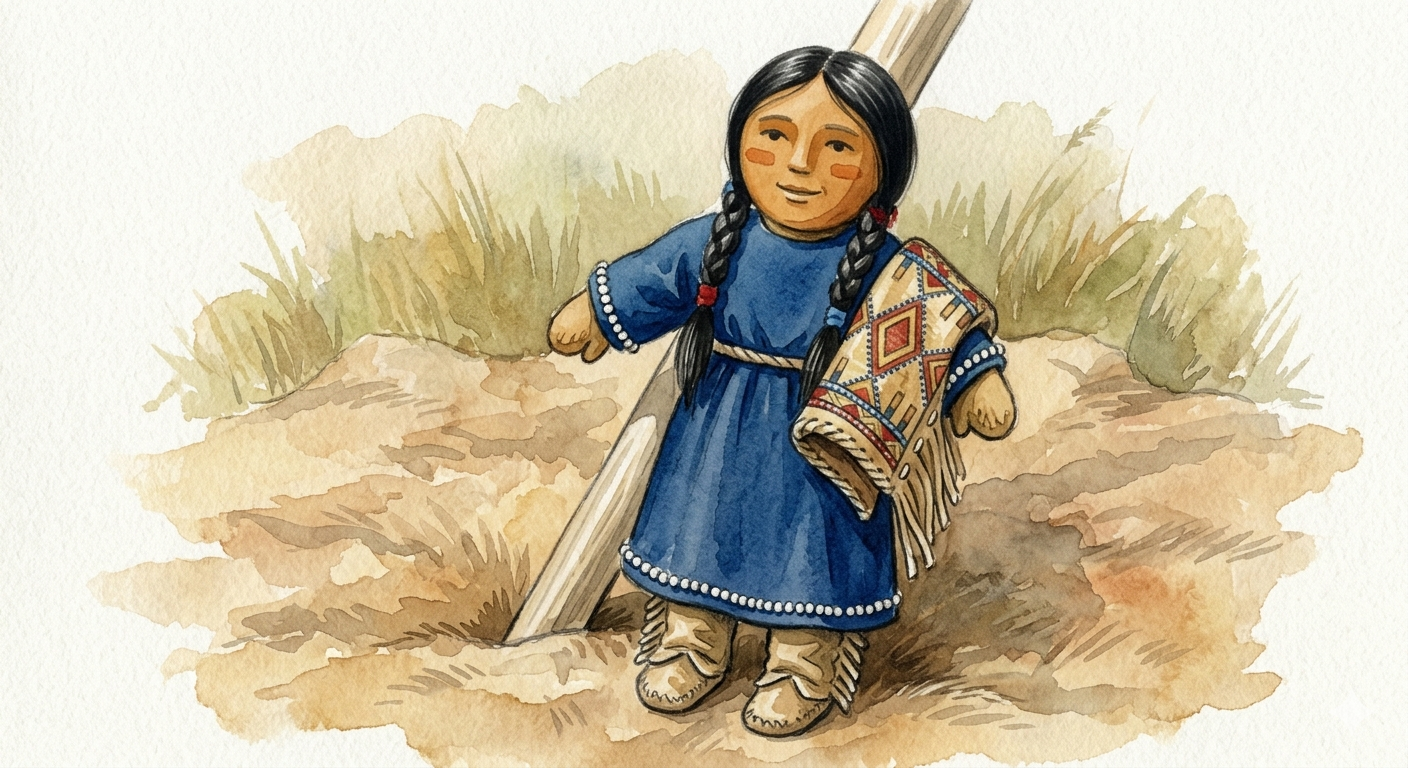
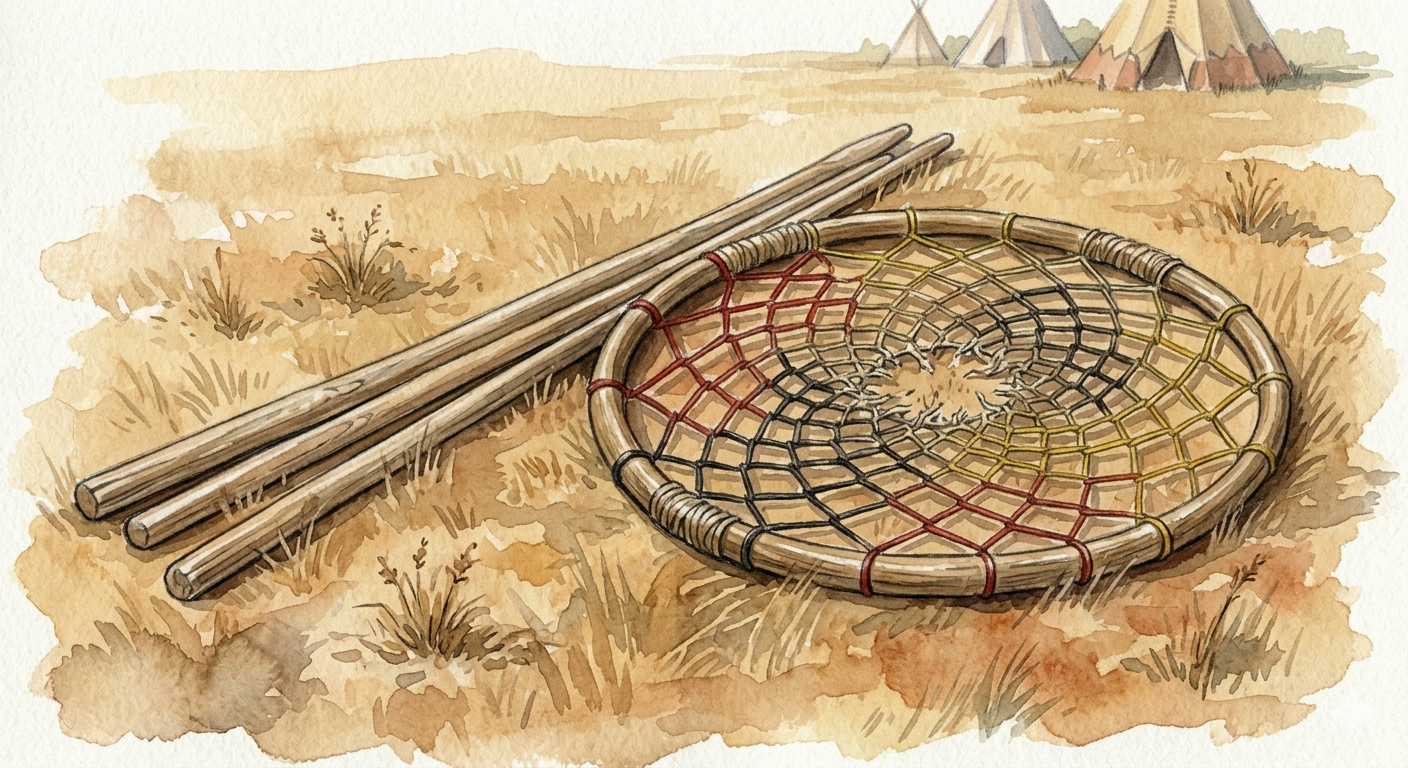
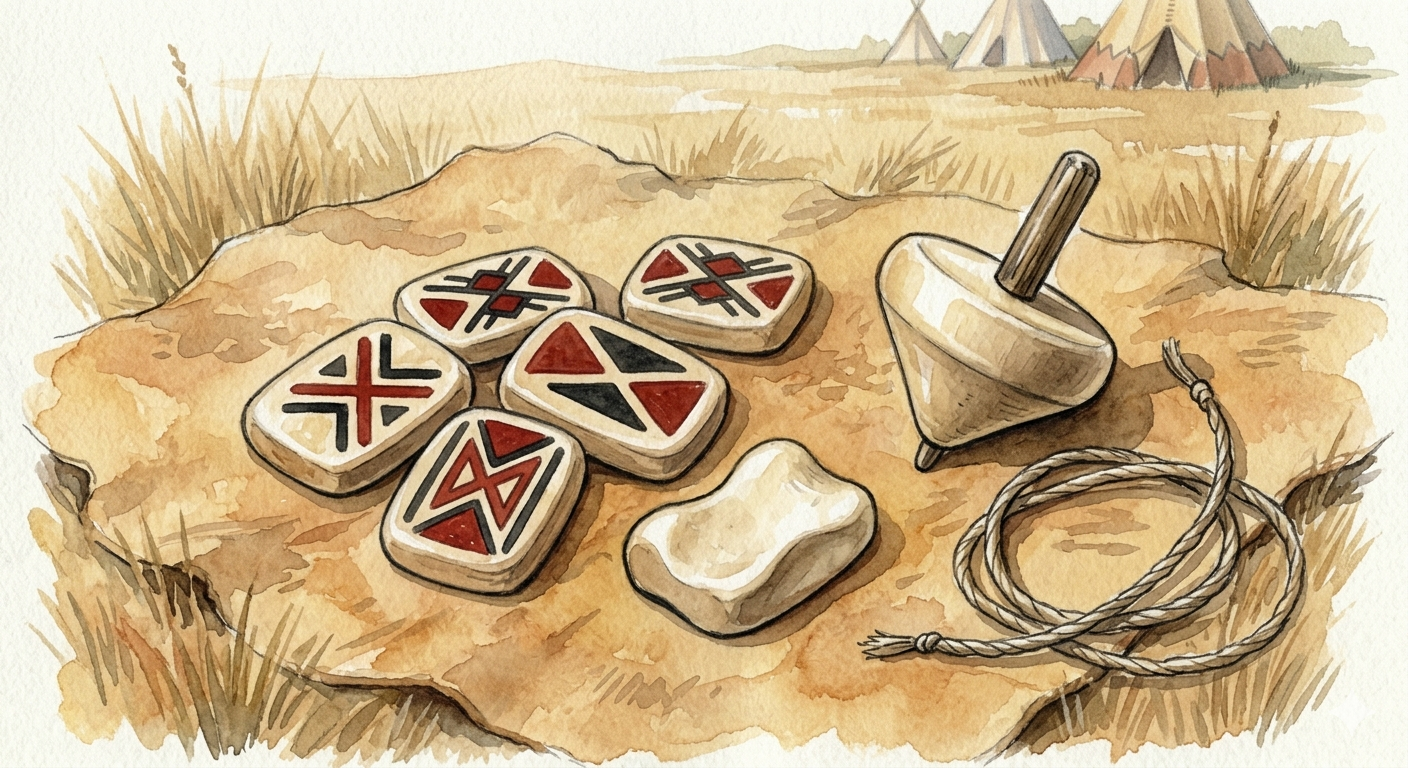
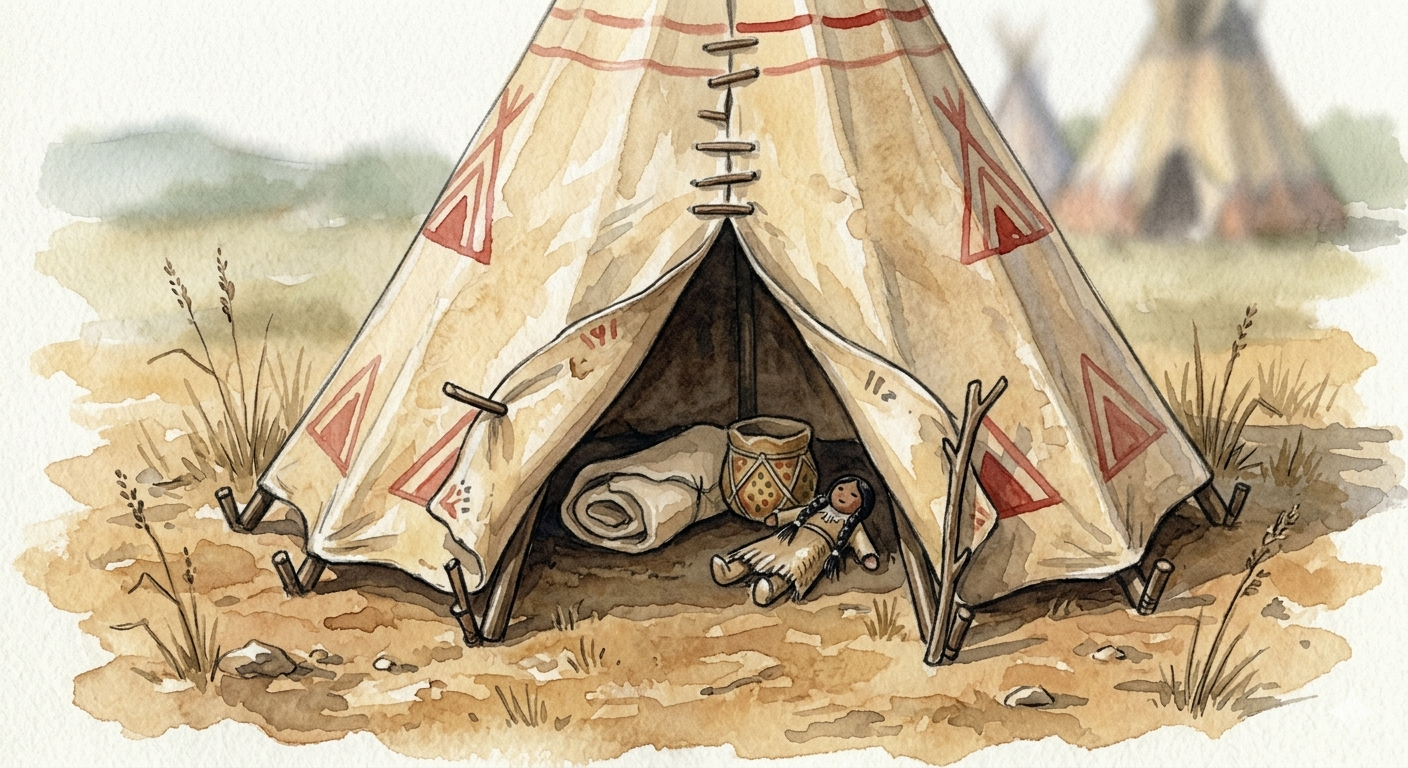
AI watercolor illustrations rendered for Glossary of Time, organized by subject. Click any image to open it full size. The images are interpretive, not documentary. Ceremonial subjects are not illustrated here.
People & Scenes
Weapons & Tools
Food & Sustenance
Toys & Children
Data Reference
Weapons & Warrior Culture
On warrior ethics: Counting coup — touching an armed enemy in battle and escaping — was considered more honorable than killing. The most decorated warriors were those who demonstrated the greatest courage at the greatest personal risk, not the highest body count.
| Weapon | Lakota Name | Pronunciation | Materials | Range | Ceremonial Role |
|---|---|---|---|---|---|
| Composite bow | Čhaŋkáhu | chahn-KAH-hoo | Bighorn sheep horn + sinew backing + ash stave; months to craft | 80–150 yd mounted | Status weapon; decorated with quillwork; presented at ceremony |
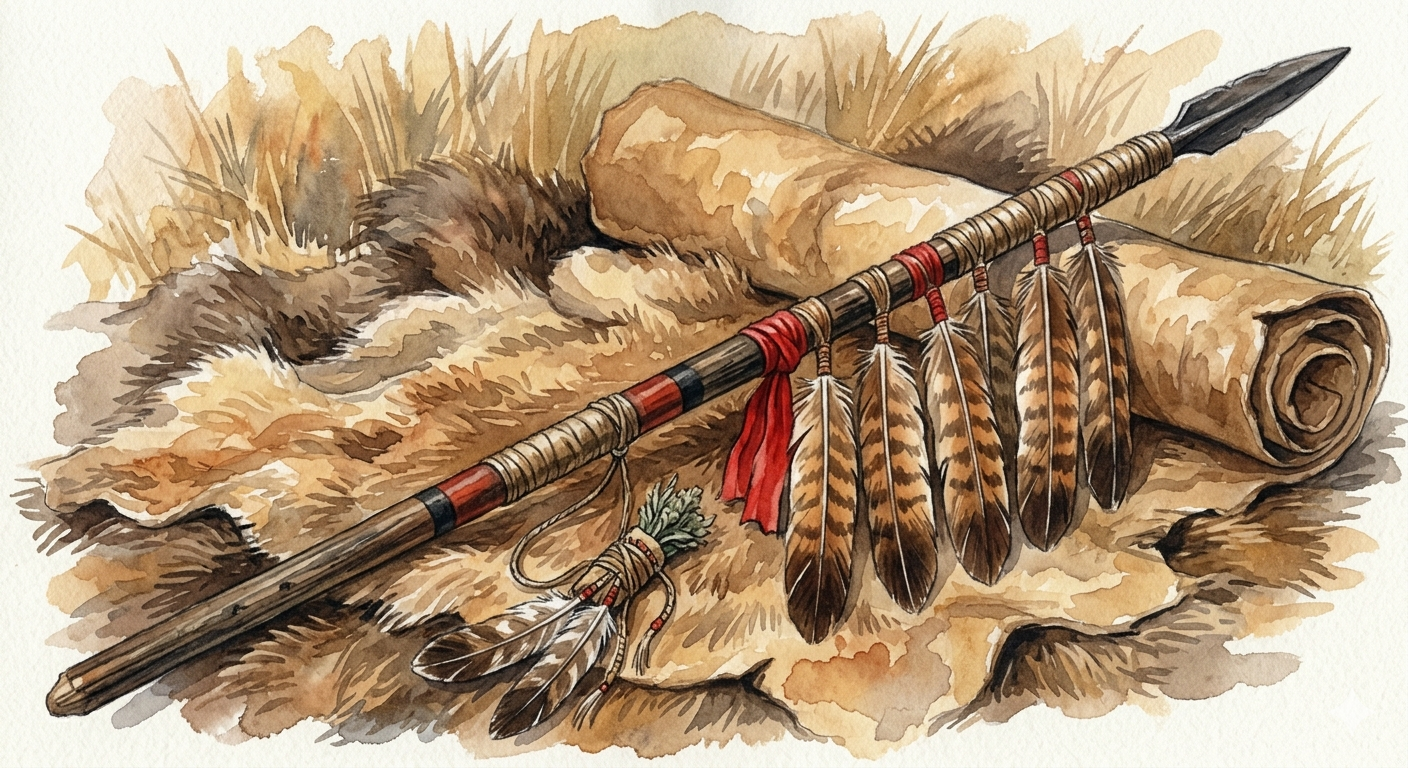
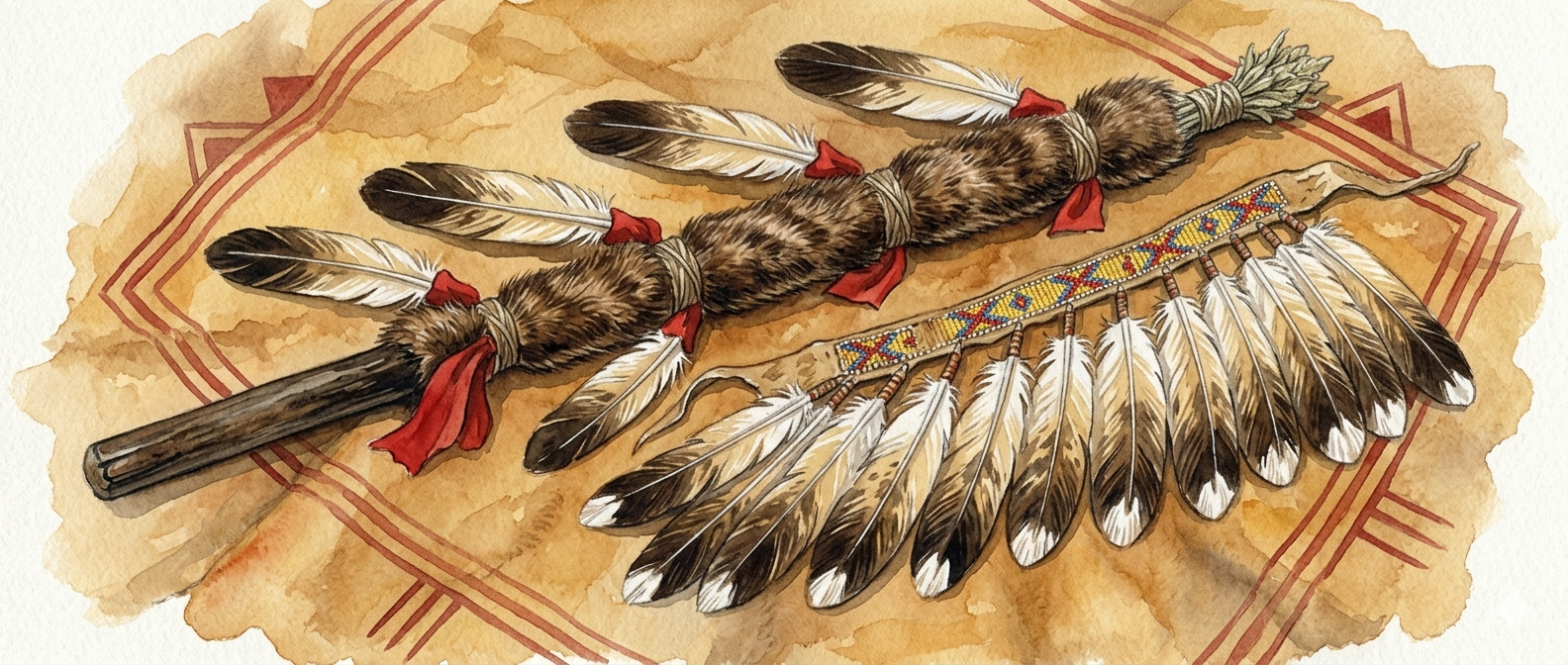
| War lance | Waȟúkeza | wah-HOO-keh-zah | Ash pole, 7–9 ft; iron tip; eagle feathers | Mounted charge | Status weapon and honor emblem; feathers marked honors recognized by the community |
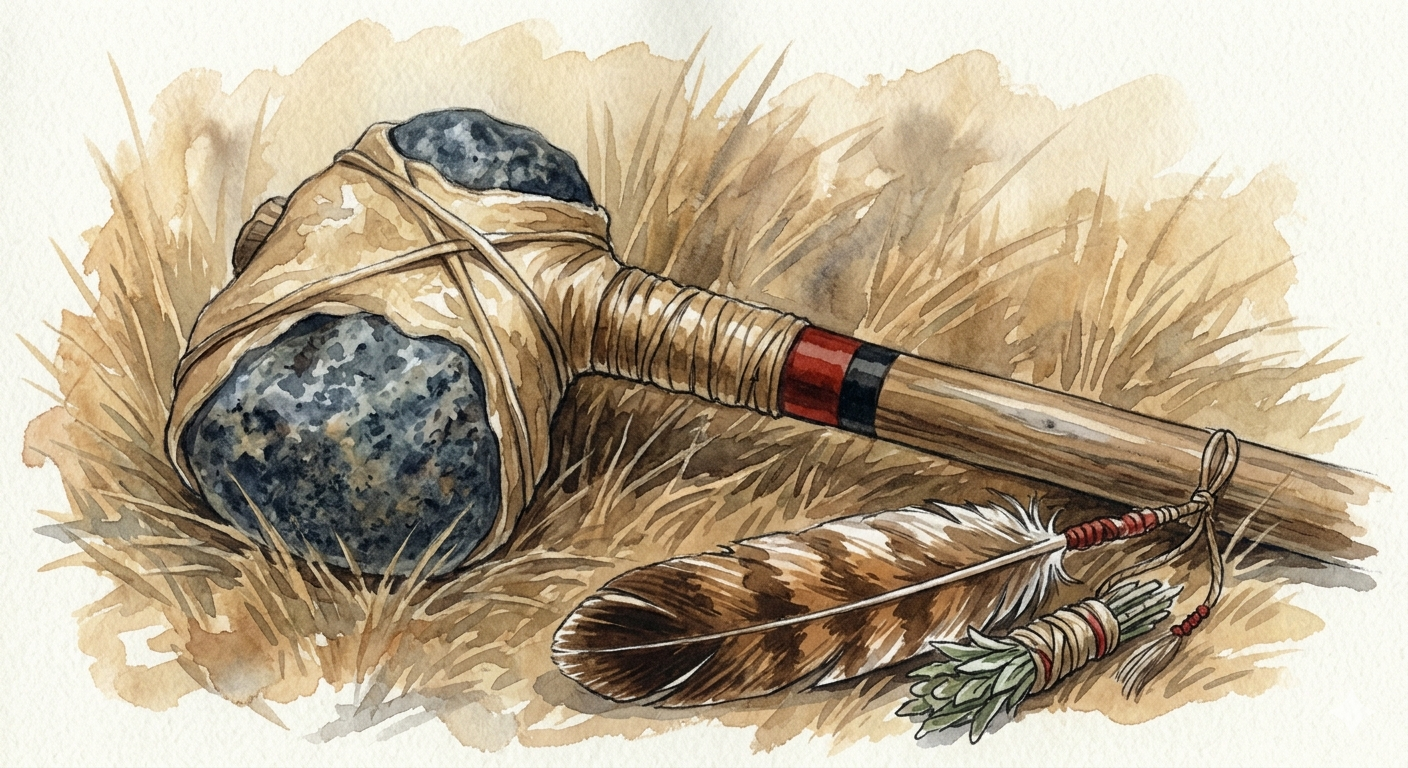
| War club | Čhaŋčhéga | chahn-CHEH-gah | Granite head, rawhide wrap, elk/ash handle; owner-crafted | Close combat only | Most intimate weapon — required closing distance; personally crafted and unique |
| Vision shield | Wačhéčha | wah-CHEH-chah | Two-layer bison bull-neck rawhide; vision-painted imagery | Defensive | Revered: a personal protective emblem. |
| Coup stick | Čhaŋkáhu Yuhá | chahn-KAH-hoo yoo-HAH | Decorated wood, otter fur, eagle feathers, quillwork | Touch only | Deepest ceremonial — the highest battle act is touch, not kill; carried to display honors |
| Knife | Mína | MEE-nah | Pre-contact: flint/obsidian; post-contact: trade iron; antler handle | Utility | An ordinary multipurpose knife used for butchering, crafts and daily work. |
| Tomahawk | Čhaŋkpé | chahn-KPEH | Pre-contact: granite; post-contact: trade iron pipe head, ash handle | Thrown or close | Pipe tomahawks used ceremonially — pipe bowl on one end serves dual function |
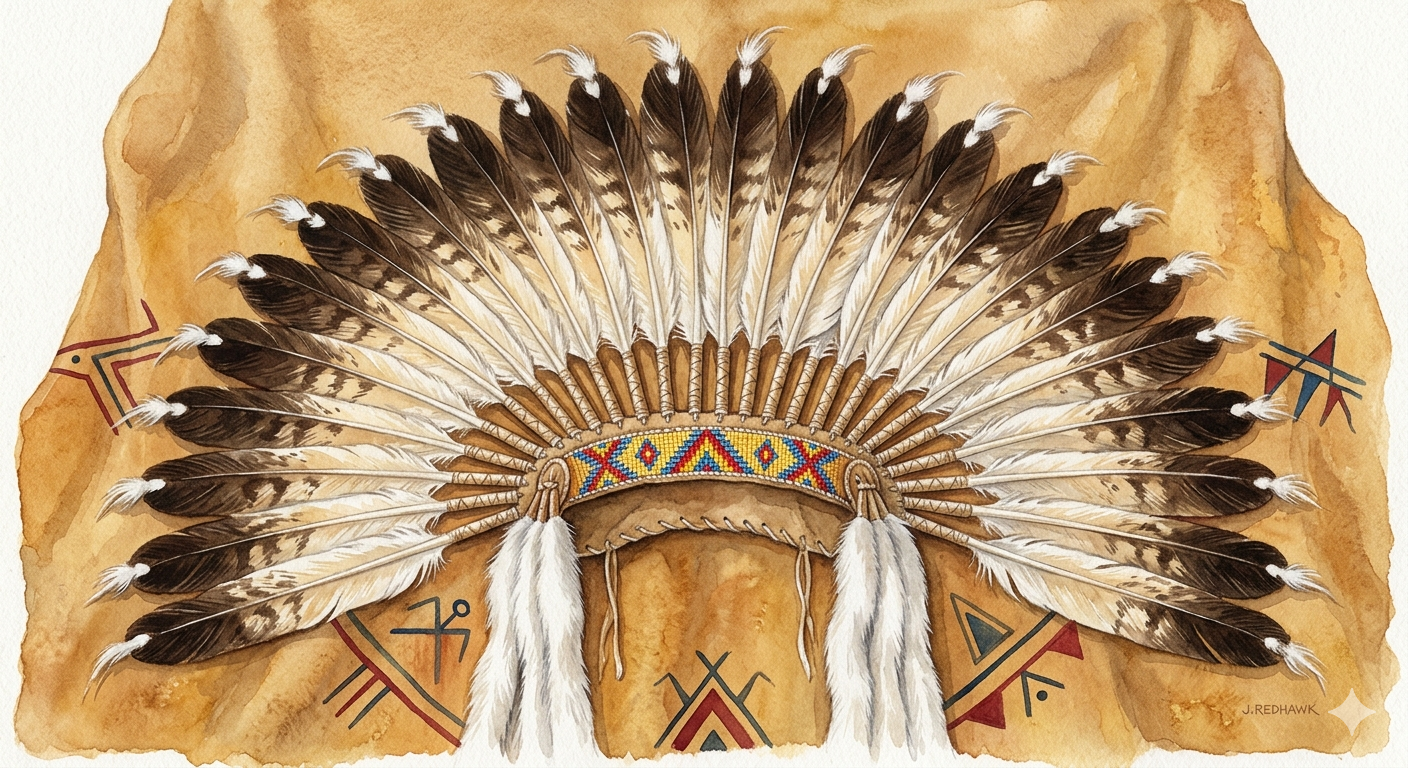
| War bonnet | Wapháha | wah-PAH-hah | Golden eagle tail feathers, hide base, quillwork, ermine strips | Regalia — not a weapon | Eagle feathers marked honors earned and recognized within the community. A bonnet was not worn casually. |
Plains peoples, including the Lakota, ranked war honors. Touching a living enemy was among the highest; the details varied between nations.
Data Reference
Food System & Sustenance
Tens of millions
Buffalo on the Plains · 1800
The Lakota food economy’s entire foundation
<1,000
Buffalo remaining · 1889
Commercial hunting, encouraged by federal officials, nearly ended the herds
12
Parts of the buffalo used
Dung to tongue — nothing discarded
Years
Wasná shelf life
Pemmican without refrigeration
| Food | Lakota Name | Pronunciation | Season | Preparation | Ceremonial? |
|---|---|---|---|---|---|
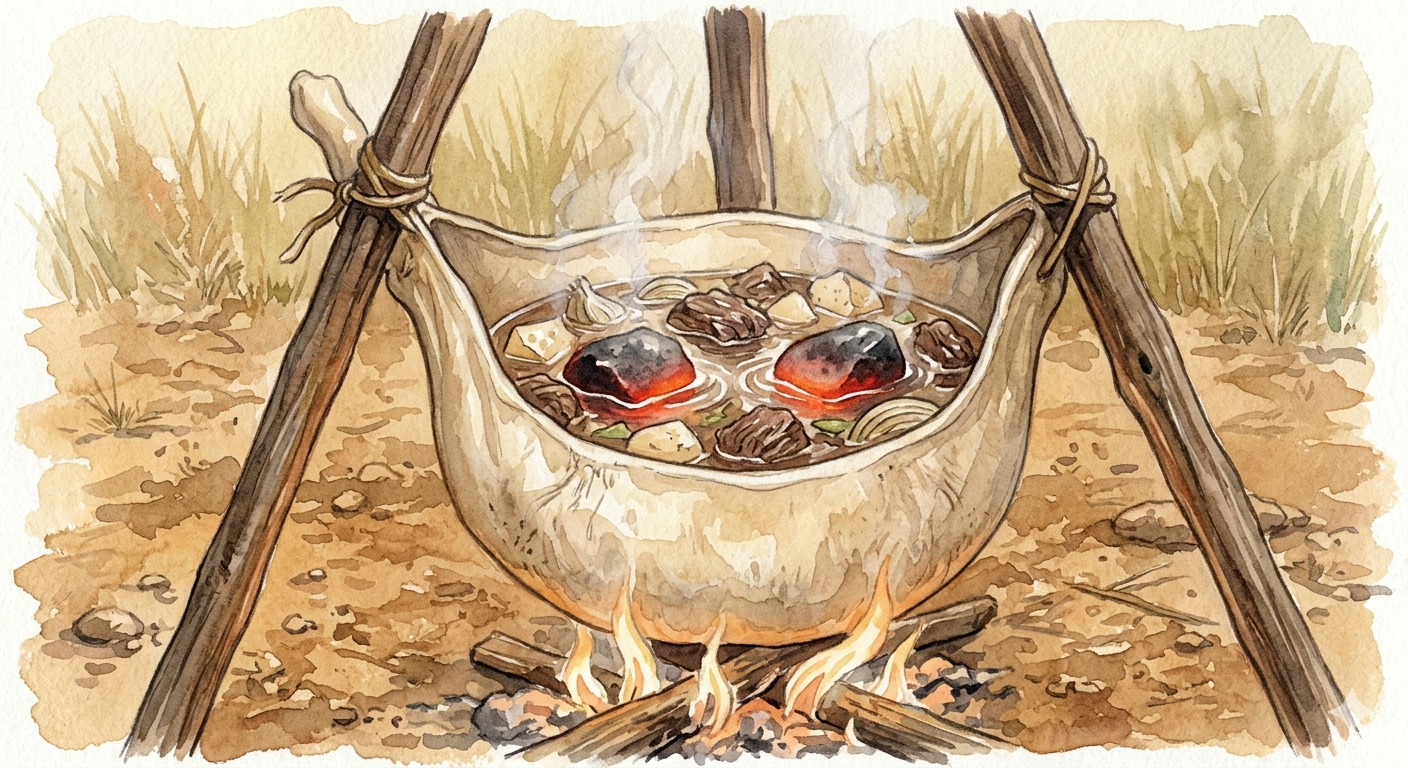
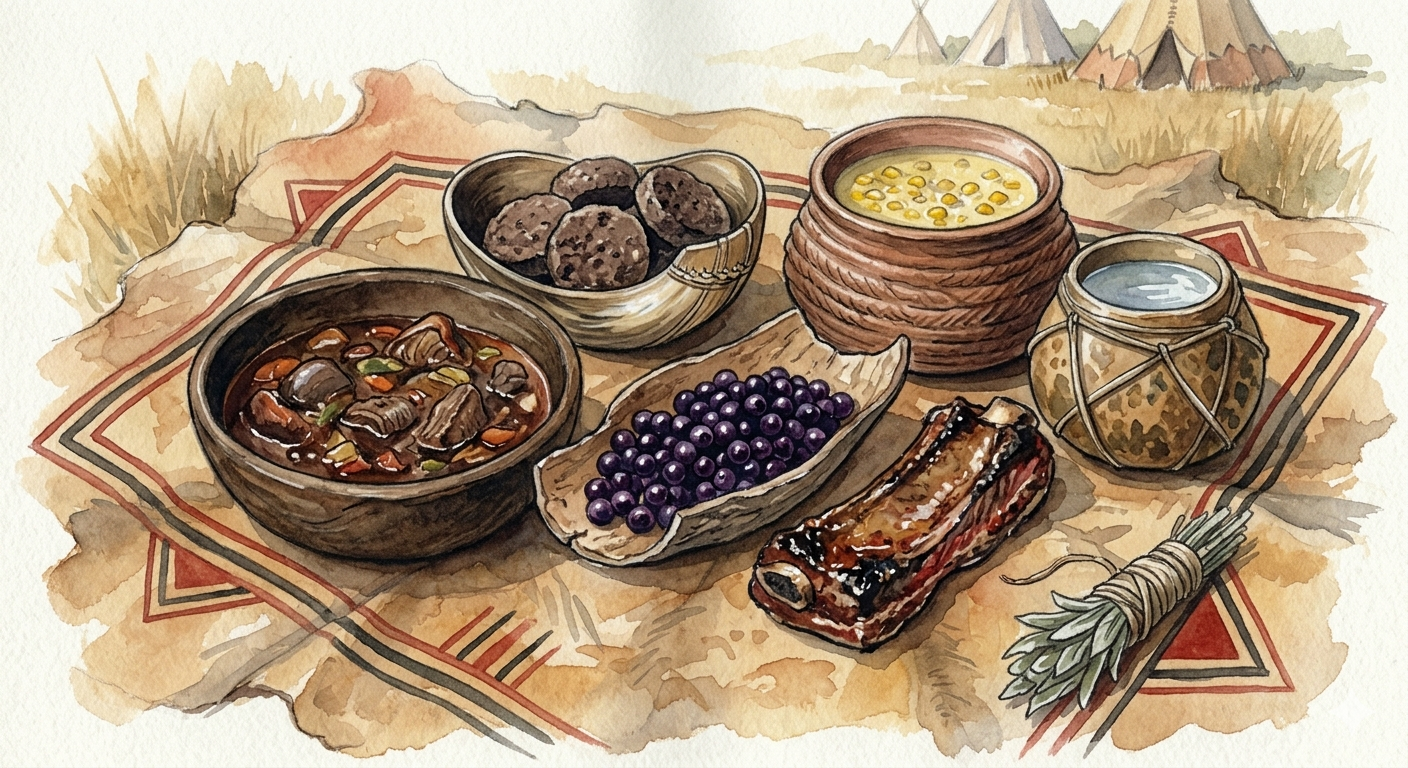
| Buffalo | Tȟatȟáŋka | tah-TAHN-kah | Year-round (hunt cycles) | Roasted, boiled in stomach vessel, dried, pemmican | Heart eaten raw after first kill; pre-hunt prayer required |
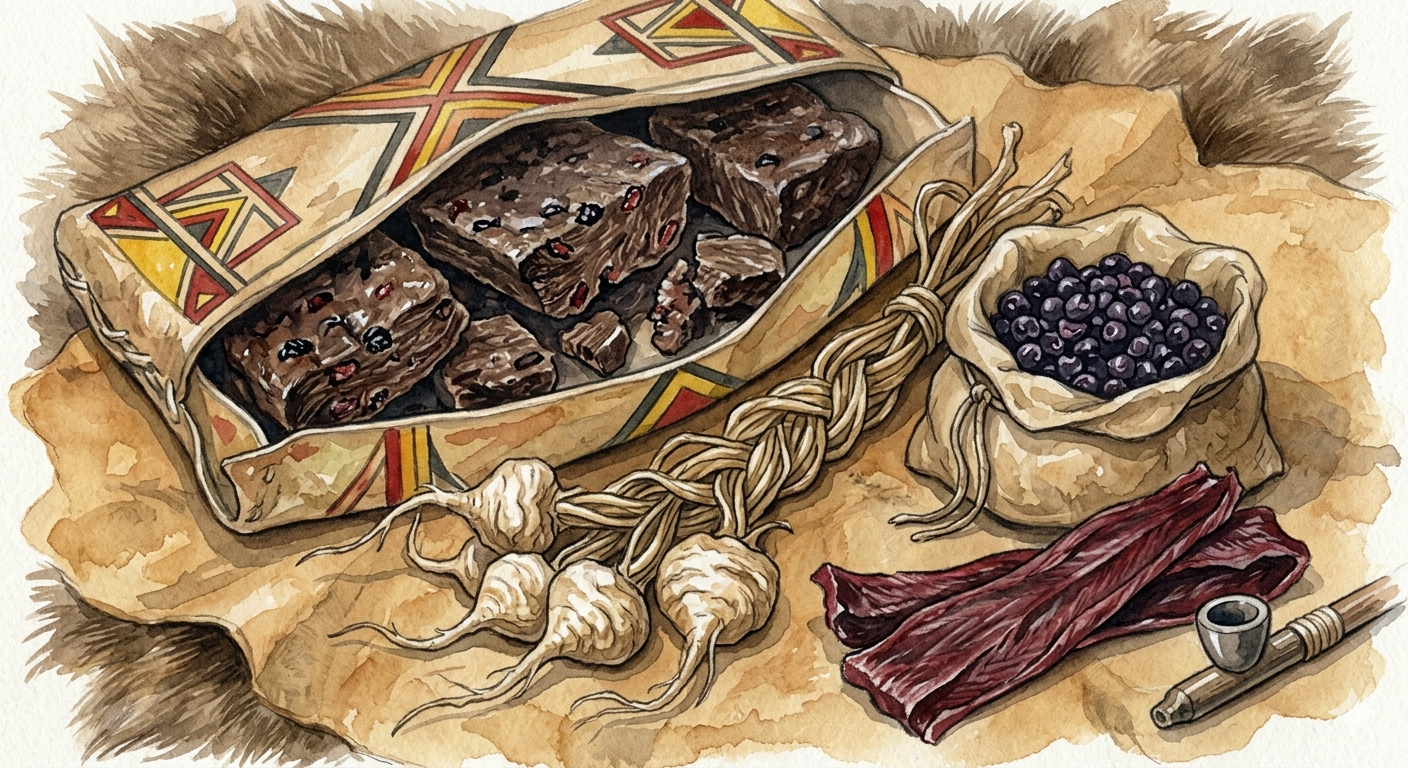
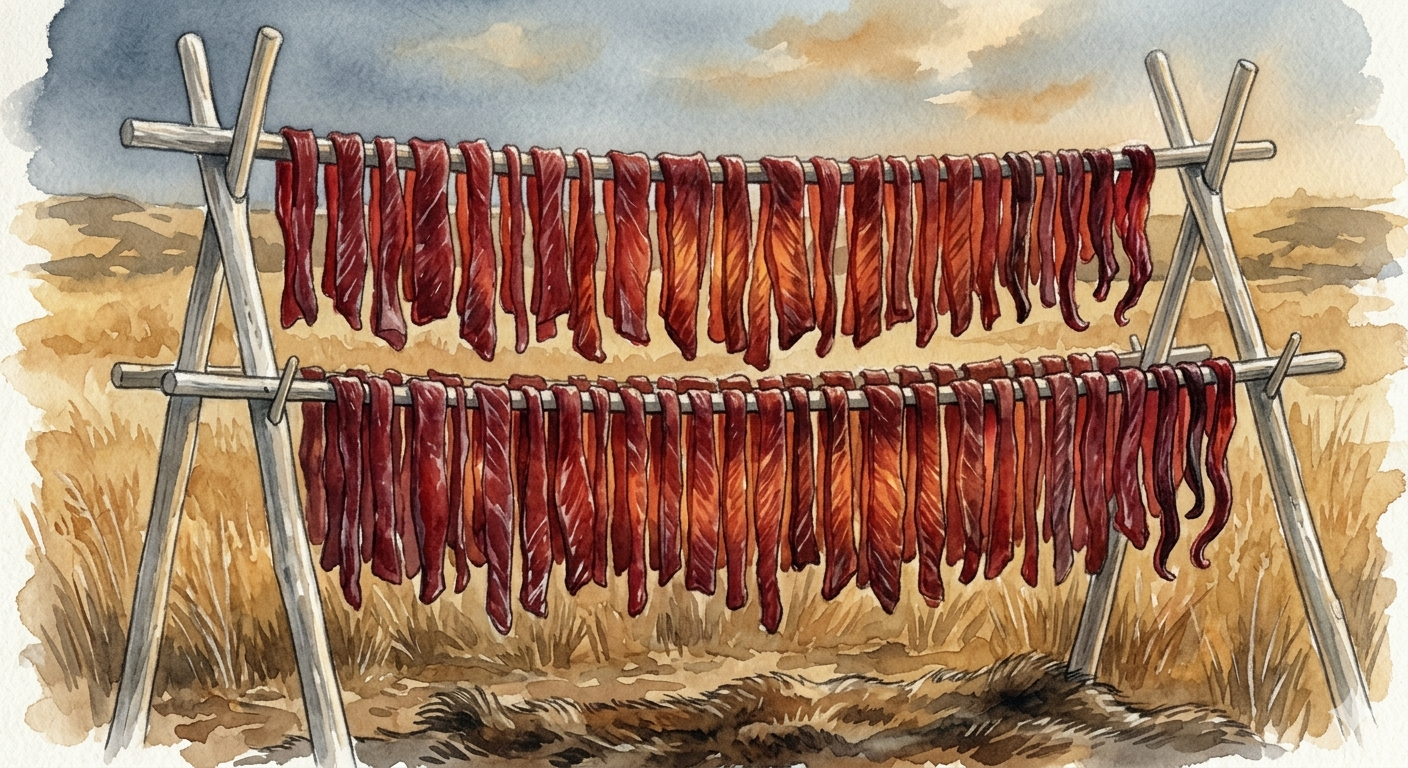
| Pemmican | Wasná | wah-SNAH | Made late summer; eaten all winter | Dried meat + rendered fat + chokecherries, pounded and compressed | Used in ceremony; given as gift of honor; lasts years without refrigeration |
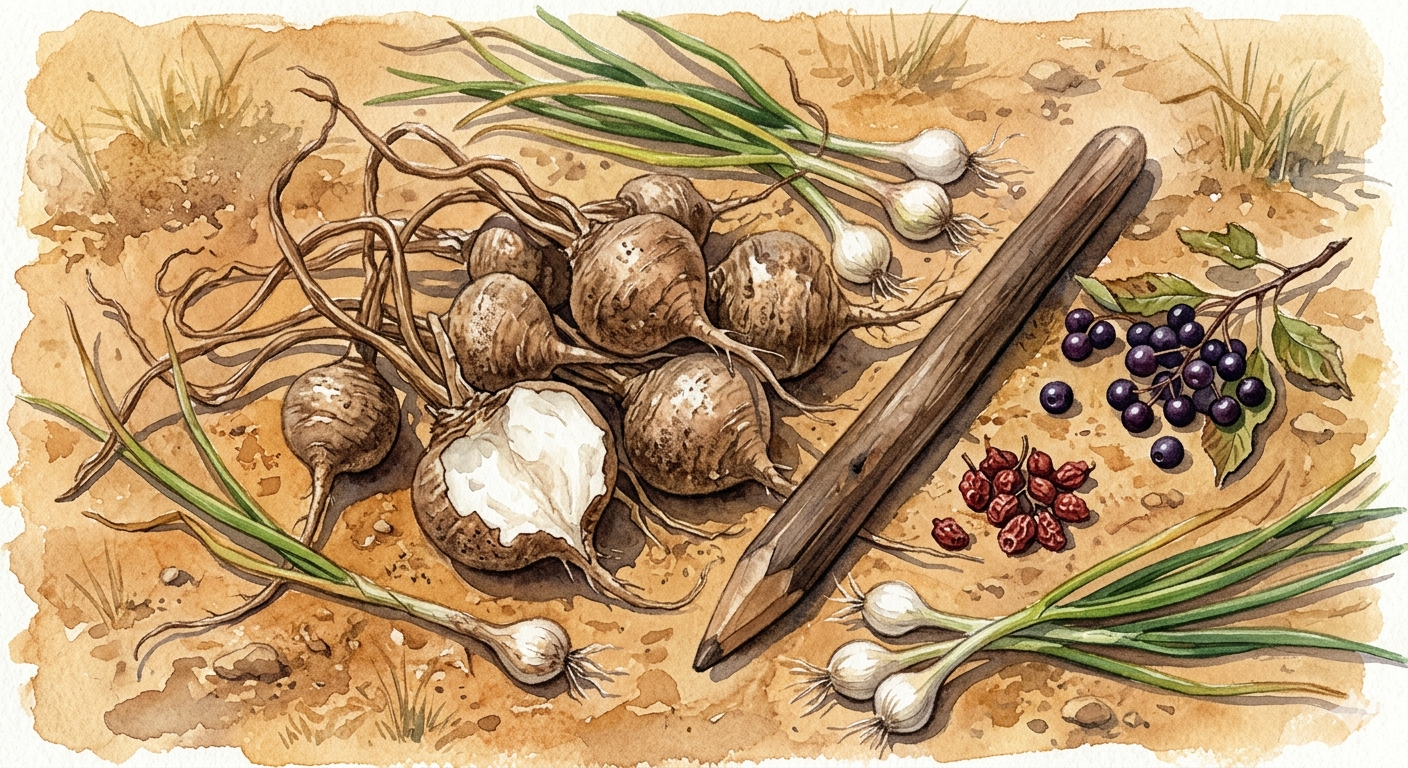
| Prairie turnip | Thíŋpsiŋla | teen-PSEEN-lah | Late spring–early summer | Raw, boiled, dried and stored; braided in strings for winter | Presence in bridal gift indicates family wealth |
| Chokecherries | Čhaŋpá | chahn-PAH | Late summer | Fresh; dried; pemmican ingredient; soup | A staple summer-harvest berry |
| Wild onion | Psinčála | pseen-CHAH-lah | Spring–summer | Raw; cooked with meat | No |
| Buffalo berries | Mastíŋčala waskúyela | mah-STEEN-chah-lah | Fall | Fresh; dried | No |
| Traded corn | — | — | Winter stores | Received from Mandan/Hidatsa; boiled | Not culturally central to Lakota ceremony |
| Buffalo Utilization — Every Part Used | |
|---|---|
| Hide (tanned) | Tipi cover (15–20/lodge), robes, moccasins, bags, drum heads, shields, cradle boards |
| Hide (rawhide) | Parfleche containers, shields (layered), knife sheaths, binding, drumheads |
| Meat | Fresh roasted; dried jerky; pemmican (wasná); bone marrow boiled for soup |
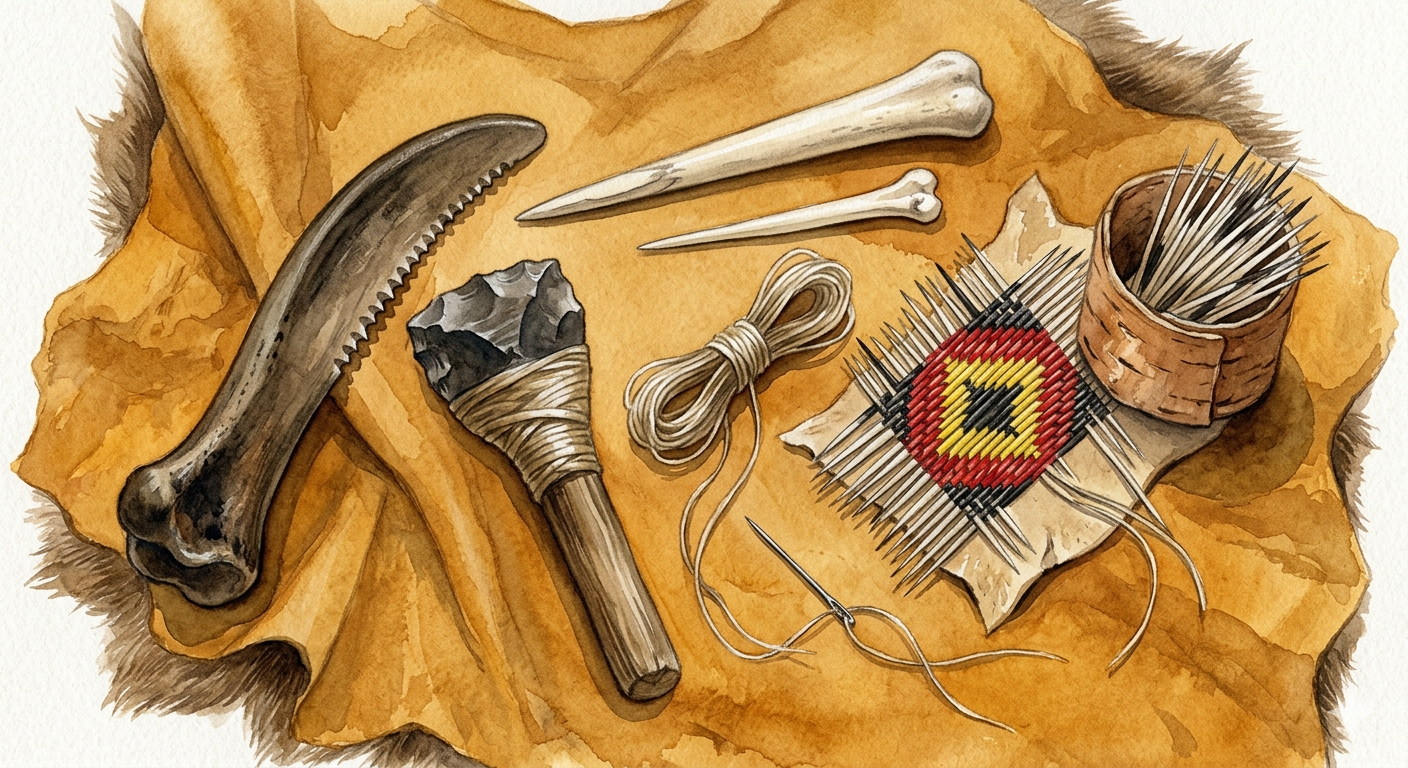
| Bones | Awls, needles, sled runners, knives (shoulder blade); broth from boiling |
| Sinew | Bowstrings, thread, lashing — strongest natural cordage; stored dried |
| Stomach / bladder | Cooking vessel (heated with fire-stones); water carrier |
| Dung (dried) | Primary fuel on treeless Plains — the only practical fire source in open country |
| Fat / tallow | Pemmican base; hair grease; leather waterproofing; lamp fuel |
| Horns / hooves | Cups, spoons, glue (boiled hooves), headdress components |
| Tongue | Considered a delicacy; dried tongue used as a grooming tool |
| Tail | Fly whisk; ceremonial use; children’s toy |
| Hair | Rope; saddle pad stuffing; clothing ornamentation |
Data Reference
Important Objects, Symbols & Material Culture
| Object | Lakota Name | Pronunciation | Material | Role & Standing | Significance |
|---|---|---|---|---|---|
| Pipe | Čhaŋnúŋpa | chahn-NOON-pah | Catlinite bowl; wood stem; quillwork wrap | Revered symbol | A central symbol of prayer and of binding agreements. |
| Medicine bundle | Wóphiye | WOH-pee-yeh | Hide exterior; personal contents | Revered · personal | A personal bundle of items held in high regard by its keeper; its contents are private. |
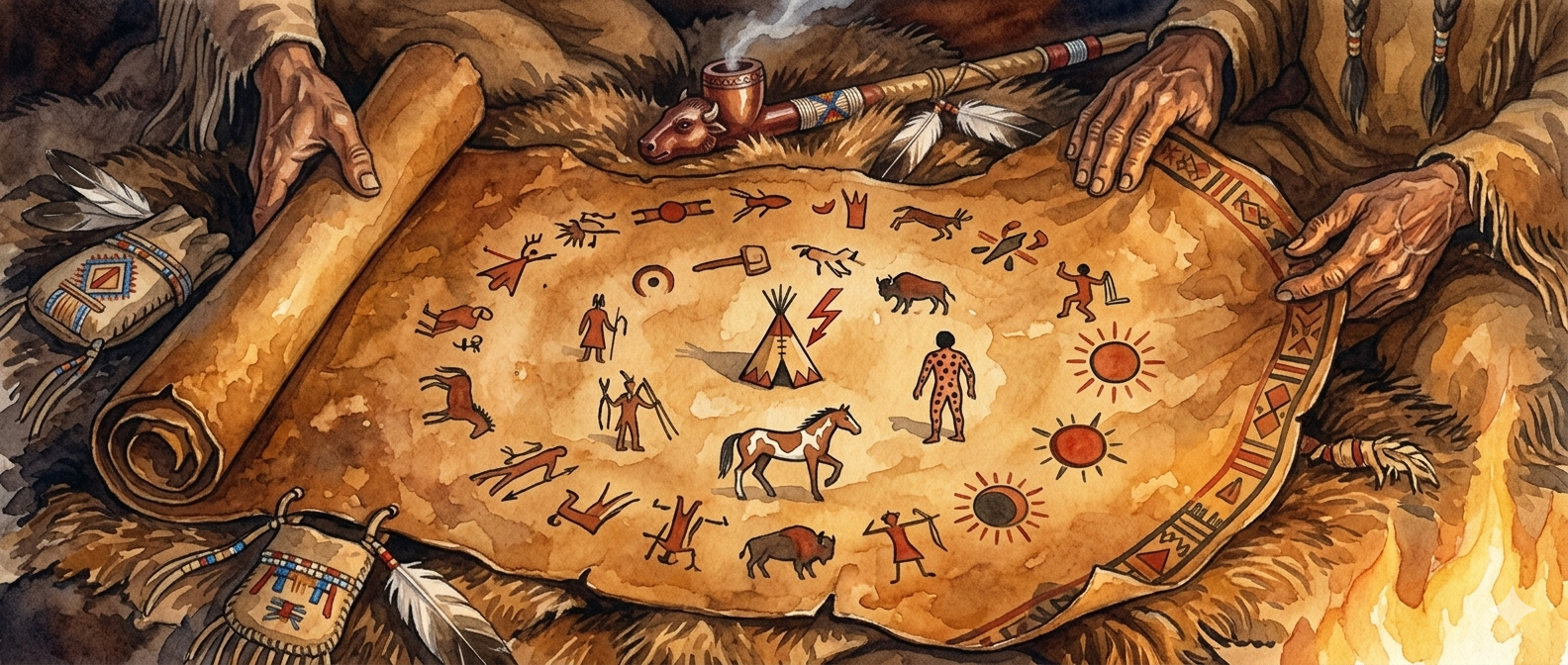
| Winter count | Waniyetu Wowapi | wah-NEE-yeh-too woh-WAH-pee | Buffalo hide; natural pigments | Revered record | One pictograph per year in a spiral. Living tribal record. Some extend 200+ years. |
| Tipi | Thípi | TEE-pee | 15–20 tanned bison hides; 12–14 poles; sinew lacing | Home · woman’s property | Owned by the woman. She builds, maintains, and takes it down. Man leaves in separation — she keeps the home. |
| Parfleche | Wóžuha | WOH-zhoo-hah | Rawhide; painted geometric designs | No | Food and clothing storage. Geometric designs identify the family. Essential to mobile economy. |
| Cradle board | Čhaŋkáhu Owíŋža | chahn-KAH-hoo oh-WEEN-zhah | Wood frame; hide cover; beadwork exterior | Protected | Infant carrier for first year. Kept child upright. Beadwork represents family identity. |
| Courtship flute | siyotanka | — | Cedar wood; 6 holes; pentatonic scale | Courtship | A courtship flute (siyotanka), played by young men; a solo instrument. |
| Tipi liner | Ozáŋ | oh-ZAHN | Painted hide or trade cloth; 4–6 ft high | No | Inner insulating layer; decorated with family history, battle records, ceremony images. Living family archive. |
CGP Universe
This profile is part of Glossary of Time, the per-culture reference of the Common Ground Project. Related volumes planned: How We Fought and What We Ate.